The Vikos–Aoös Geopark reveals its secrets. Popular Science Geology Seminars
Two more activities organised by the UNESCO Global Geopark of Vikos-Aoos were successfully held as part of the celebration of 2017 as the Year of Sustainable Tourism Development, as well as Geoparks Week, an established institution now taking place simultaneously during this period in all UNESCO Geoparks.
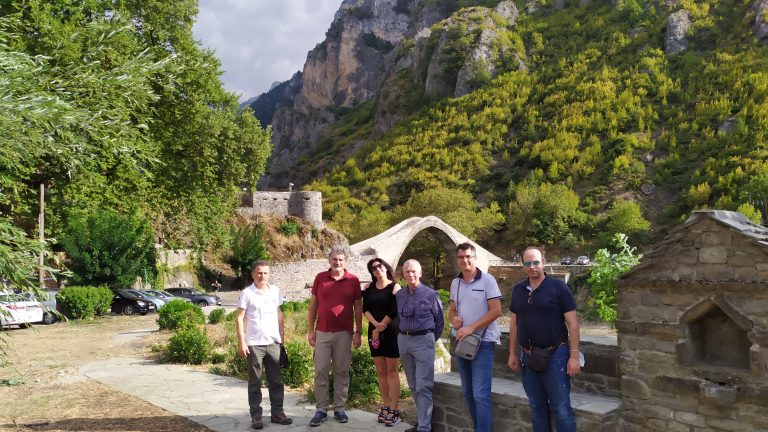
These are two popularised geology seminars that were implemented in the two neighbouring Municipalities of the Geopark, Konitsa and Zagori. Specifically, on Wednesday 15 June, the first seminar took place in Konitsa, with relevant presentations in the event hall of the Konitsa Town Hall, followed by a hike with the presentation of geological formations in the Aoos gorge. The following day, Thursday 16 June, a traverse of the Vikos gorge took place, from the village of Monodendri to the village of Vikos, and a detailed explanation of the geological evolution and the specific geological characteristics of the gorge was given.
«The »teachers" in introducing the unique geological wealth of the region were the two distinguished scientists, geologists from the Institute of Geological and Mining Research (IGME) and the Vikos-Aoos UNESCO Global Geopark, Dr. Panagiotis Paschos and Dr. Evangelos Nikolaou, with many years of research in the geology, cartography and hydrogeology of Epirus, and a particular love for the Geopark.
The Vikos-Aoos Geopark gathers a set of information (geosites) that, with the appropriate interpretation, reveal the geological history of the area. In presentations in Konitsa by IGME geologists and during outdoor tours of the Aoos and Vikos-Voiomatis gorges, simplified answers were given to several questions, such as:
- What is the abundant biodiversity due to? What particular fauna and flora develop there?;
- How did the landscape, the topography, influence the distinct cultural footprint of the Konitsa and Zagori region?;
- How does the geological environment affect human presence and infrastructure?
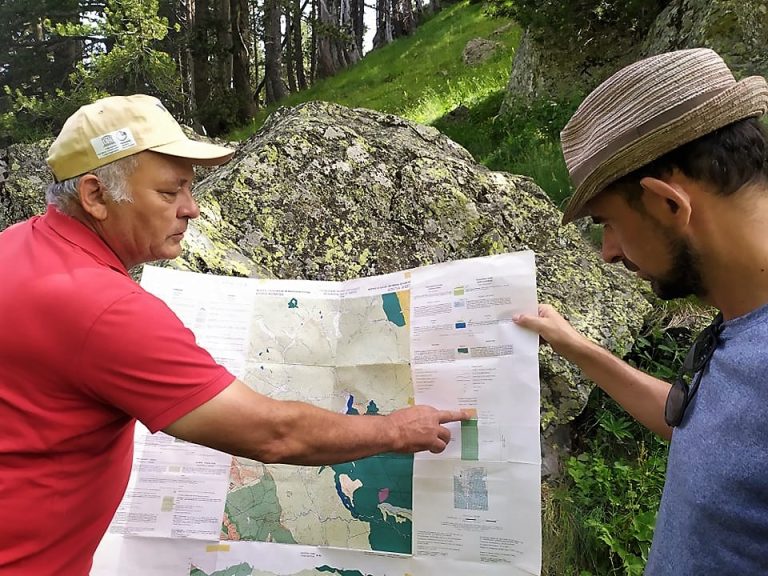
Numerous questions that arose during the excursions were discussed and analysed on the spot, such as the age of the rocks, the formation processes of the caves, which were the safe shelters–residences of prehistoric humans, the rich springs and their supply methods, and the geothermal field and thermal springs of the wider area. The lithological differences in the rocks were described, such as the igneous rocks on Smolikas and the sedimentary rocks (flysch, limestones, and dolomites) on Tymfi, and how these differences affect the landscape, vegetation, animals, humans, and infrastructure.
The two seminars, which were specifically tailored to the knowledge required by eco-tour guides and others wishing to convey information about the area's geology to the numerous visitors of the Vikos and Aoos gorges, were attended by a total of more than 60 people. They declared themselves completely satisfied with the outcome and expressed their desire for similar events to be repeated soon.
The workshops were organised by the two Municipalities, Konitsa and Zagori – with the presence and active participation of the Deputy Mayor of Konitsa, Mr. G. Kallinteris, the Mayor of Zagori, Mr. V. Spyrou, and the Municipal Councillor of Zagori, Mr. D. Exarchos – by the Epirus Development SA – with Charitakis Papaioannou and Georgia Kitsaki responsible – by the IGME, as well as with the support of the Region of Epirus, the Management Body of the Northern Pindos National Park and the Regional Tourism Service of Epirus (EOT), as members of the ED.I.A.GE. Vikos Aoos.