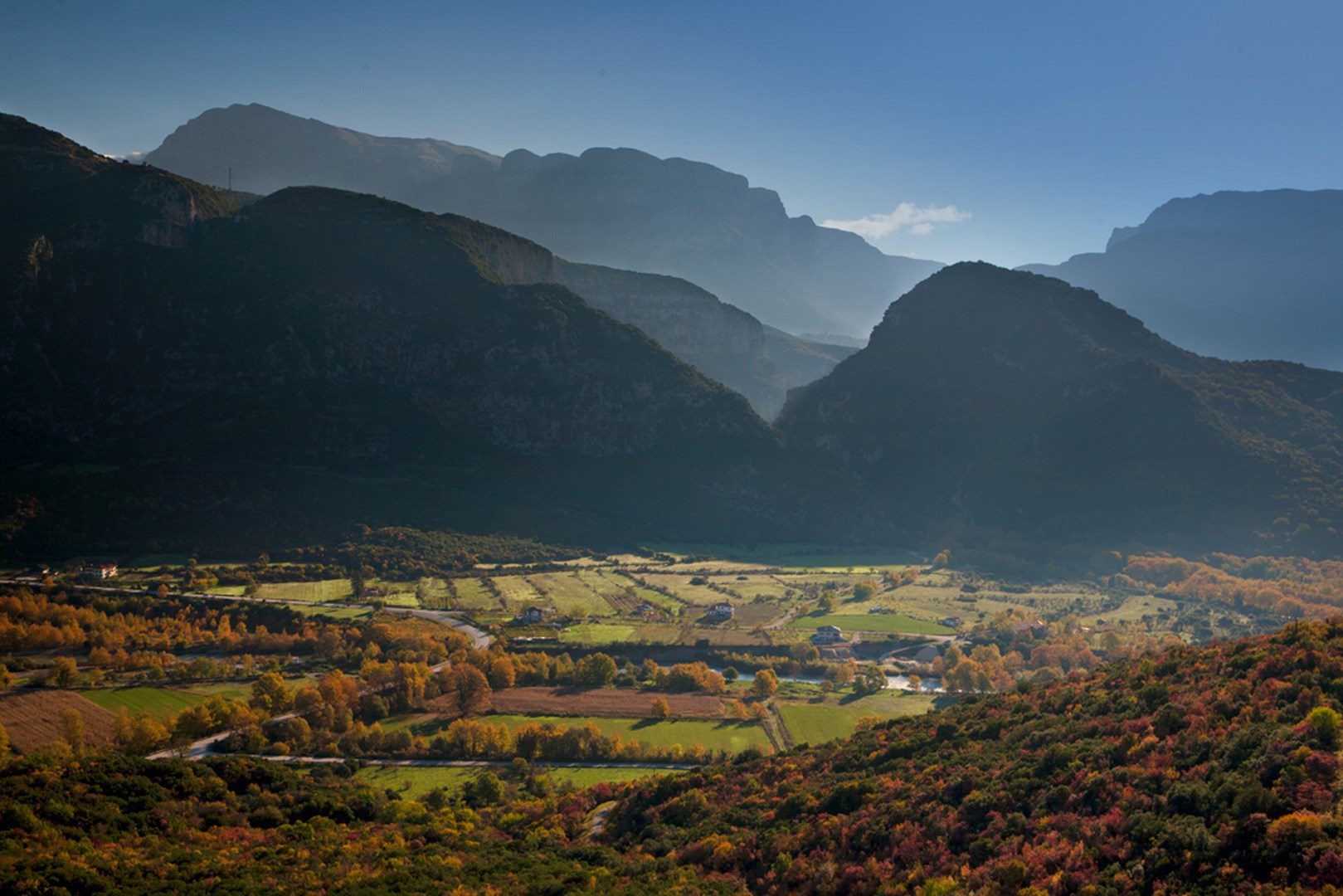
During the period of the most recent, global-scale, glacial maximum (approximately 22,000-18,000 years ago), the peaks (> 2,500 m) and karst plateaus of the West Pindus mountain range were covered year-round by ice sheets. These conditions favoured erosion of the limestone and flysch substrate and channelled large amounts of water into the Vikos-Voidomatis-Aoös river system. Natural resources were limited at that time, as was human activity.
Only when the climate began to improve (17,500 years ago), causing ice to melt and forests and wild grazing animals to spread, did Palaeolithic archers choose to systematically exploit this new ecological habitat. For the next seven millennia, families or groups on special missions used shallow hollows – mirrors of tectonic faults – in the rocky side walls of the gorge, such as Kleidi, Boila, and Megalakkos, as temporary shelters every spring and summer. There they lit fires for warmth, cooking, companionship, and protection from carnivores, such as bears, wolves, foxes, and lynx, while planning excursions on the steep slopes for the hunting of agile wild goats. The wild goat, in particular, was a coveted prey, especially for its soft hide.
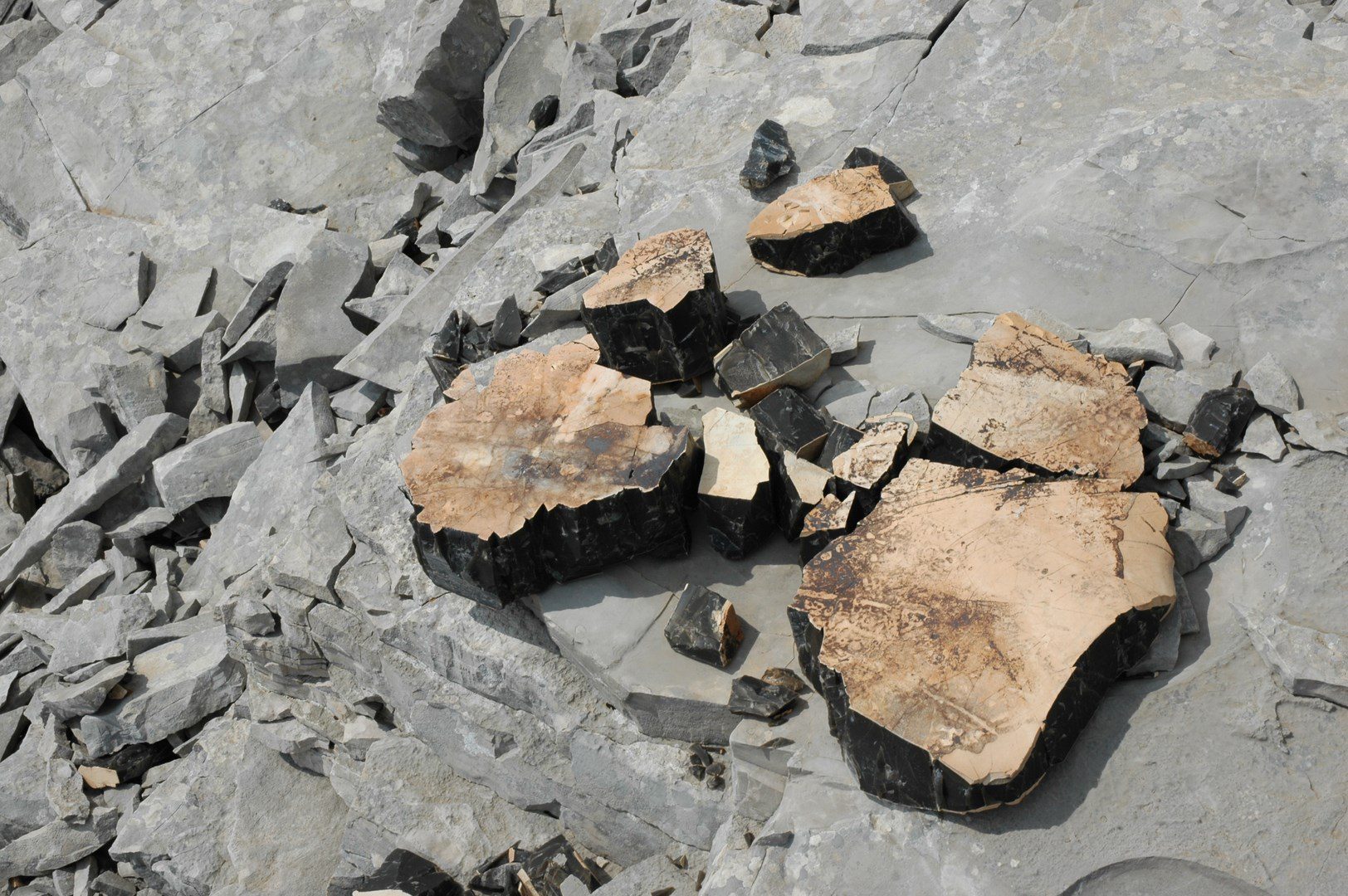
They also fished in the river and set traps for beavers, hares, and other small mammals. Possessing high technological expertise, Palaeolithic craftspeople collected pebbles from the riverbank made of a hard stone, flint, or used animal bones to make weapons and tools, such as arrowheads for bows, knives, scrapers, drills, and needles.
Furthermore, they decorated garments and their bodies with wrought beads from freshwater shells, the teeth of herbivorous mammals, and with natural red ochre.
As the forest grew denser, covering even high-altitude areas 9,000 years ago, the canyon environment became less attractive and productive. Passing hunters now obtained meat, fat, marrow, antlers, and hides from deer herds that crossed the river in the open plain of Konitsa, and they sought, following paths through ravines, new hunting grounds beyond the mountain.
We recommend visitors to the area to follow the riverside thematic route in the Voidomatis valley with information panels about palaeolithic societies and the Pleistocene ecological context.